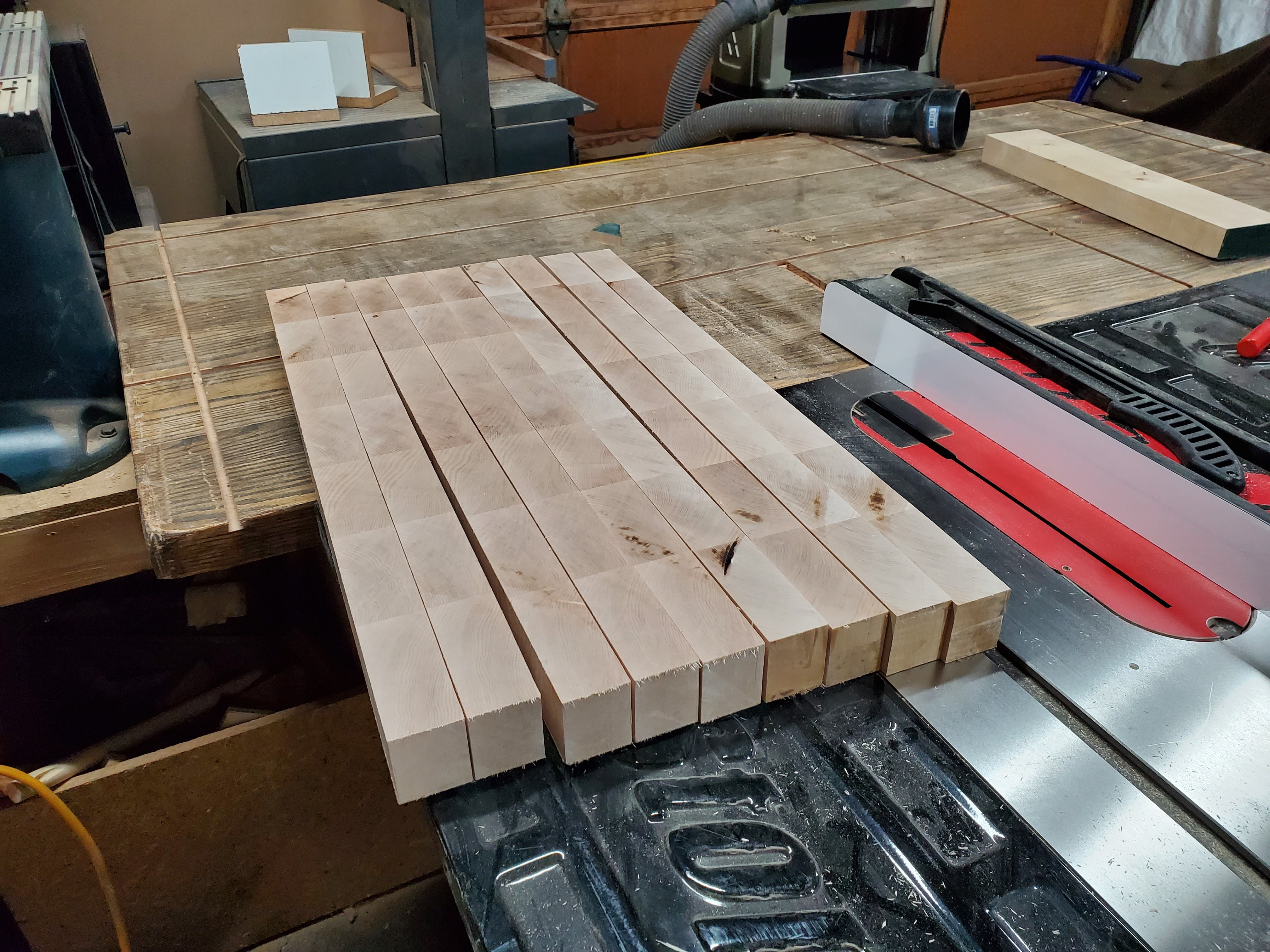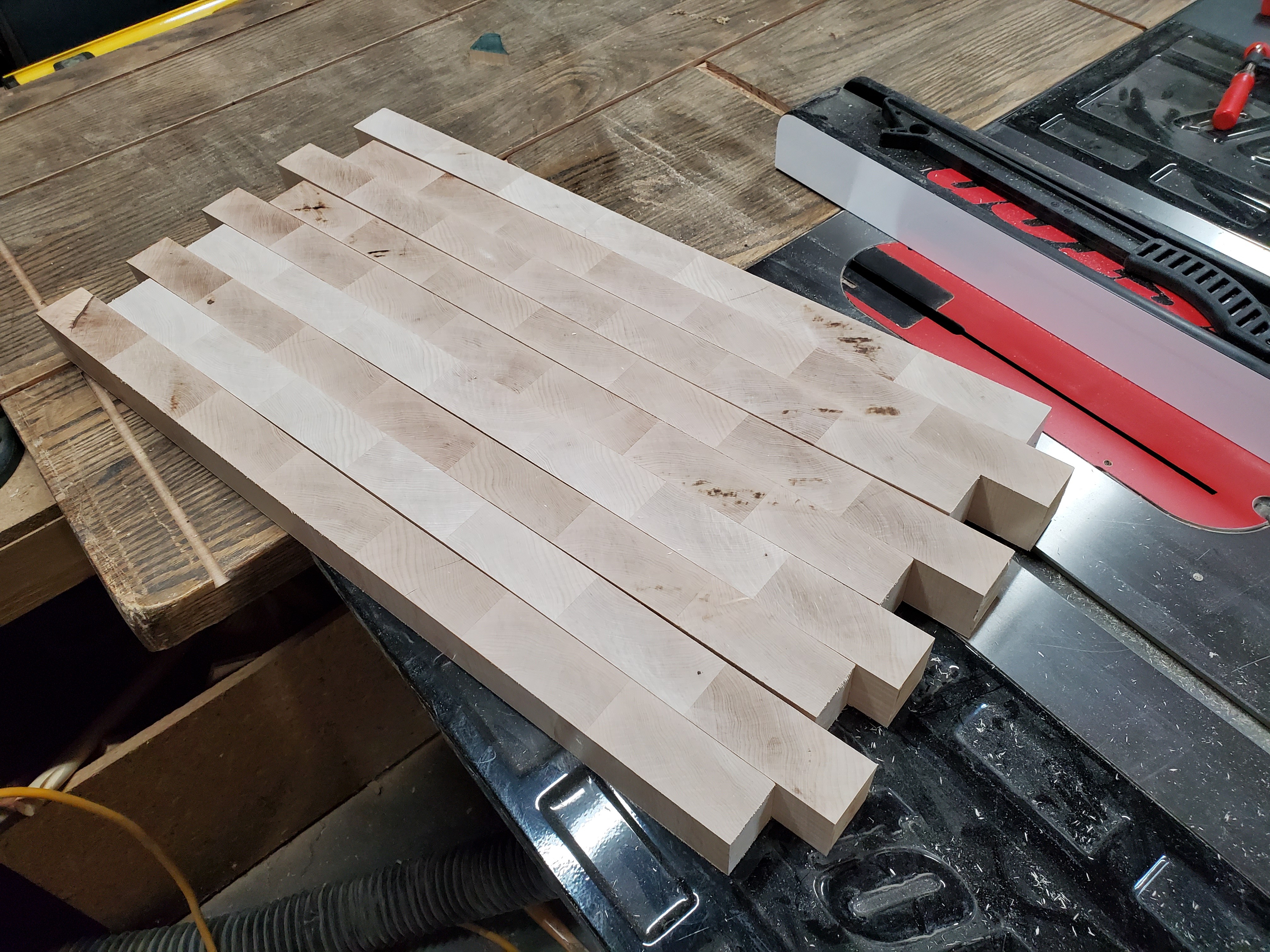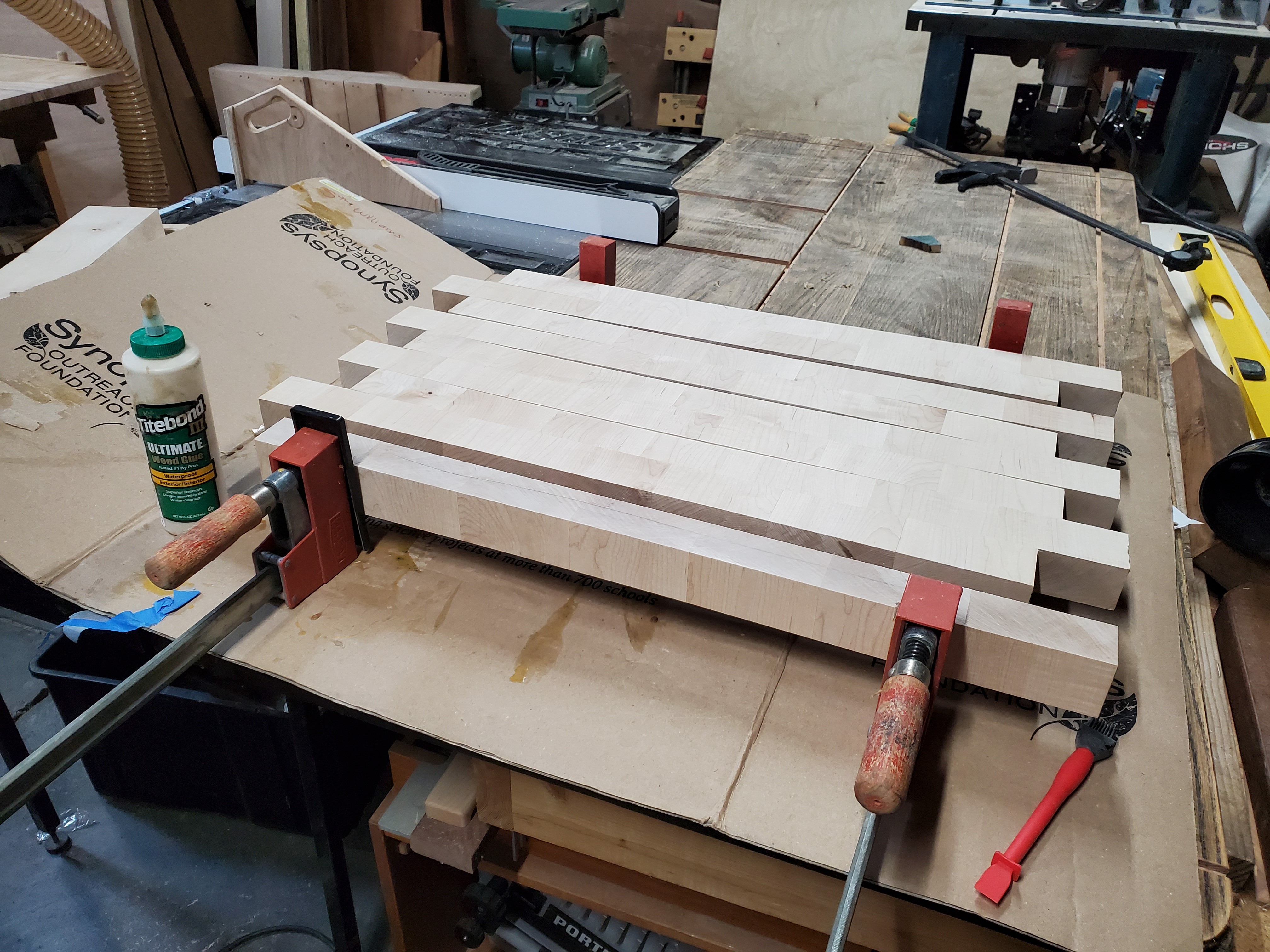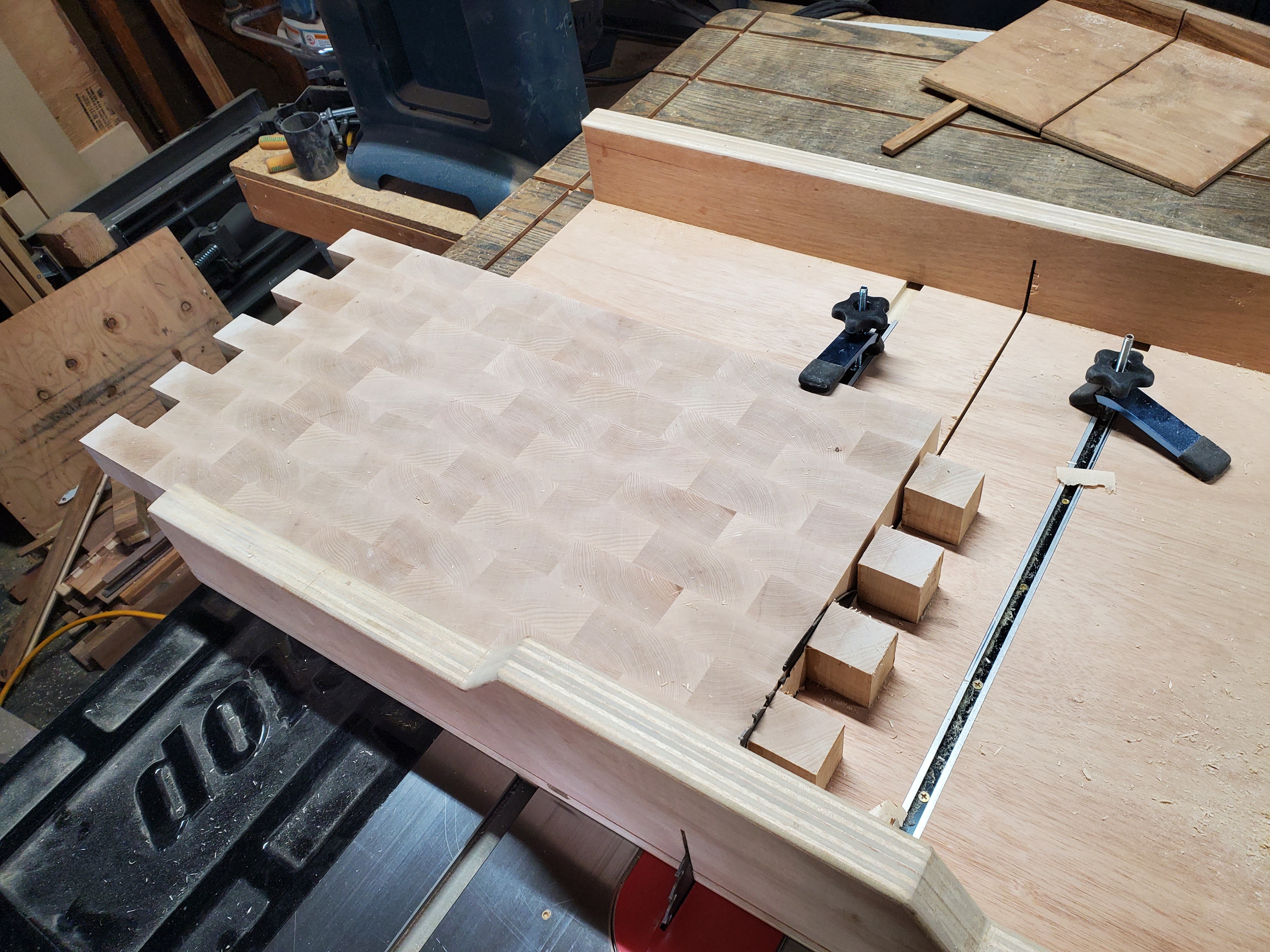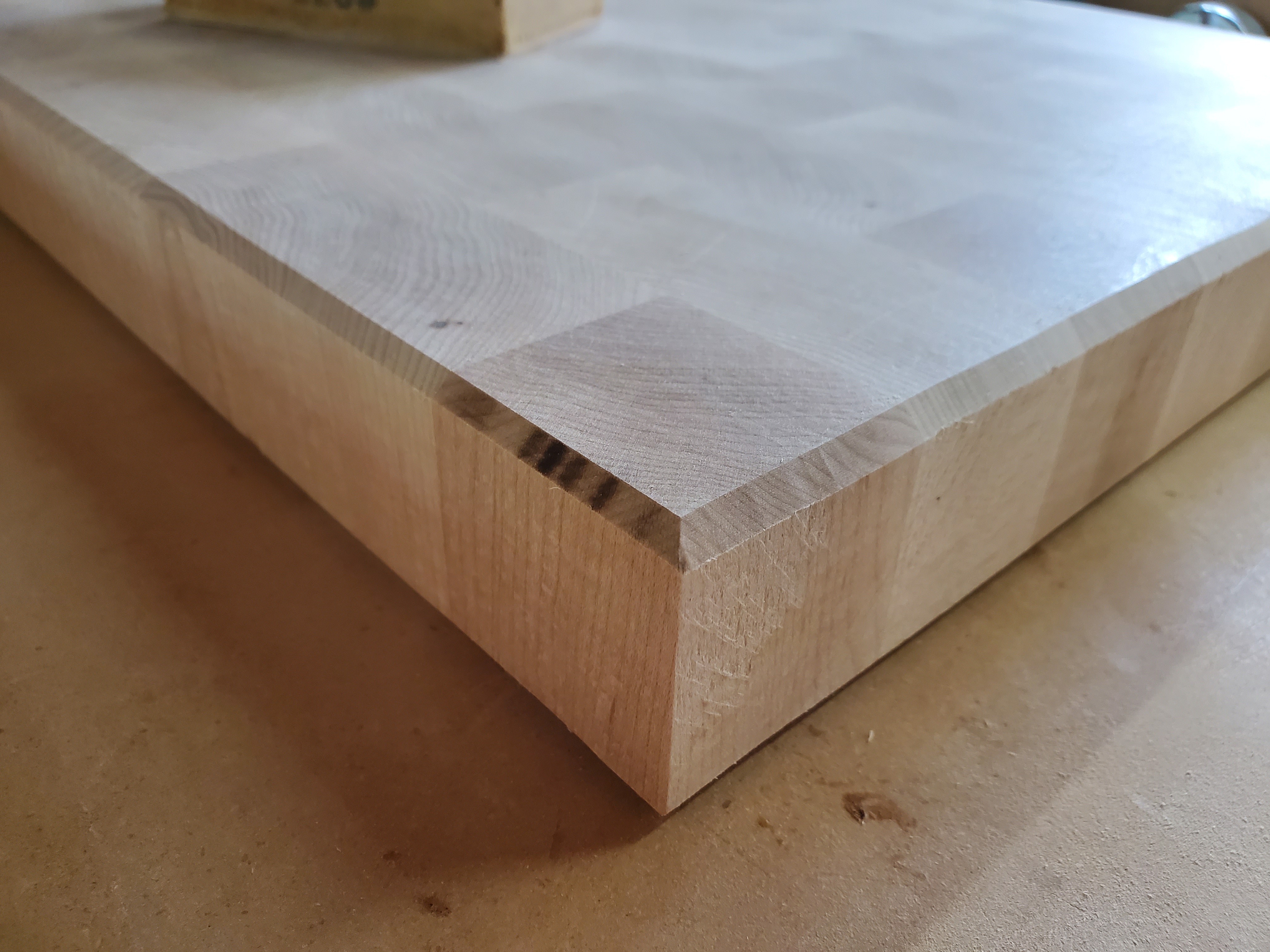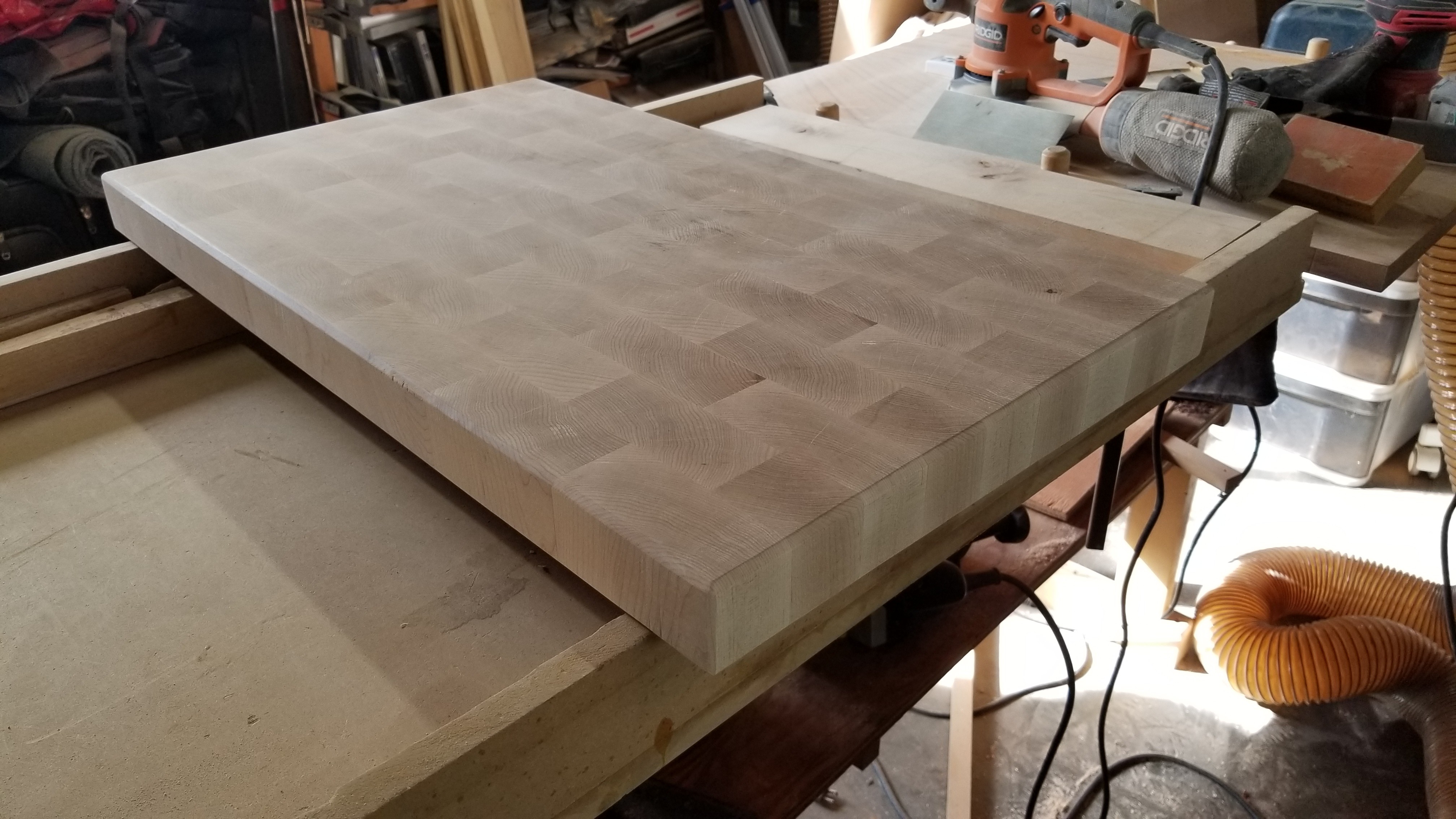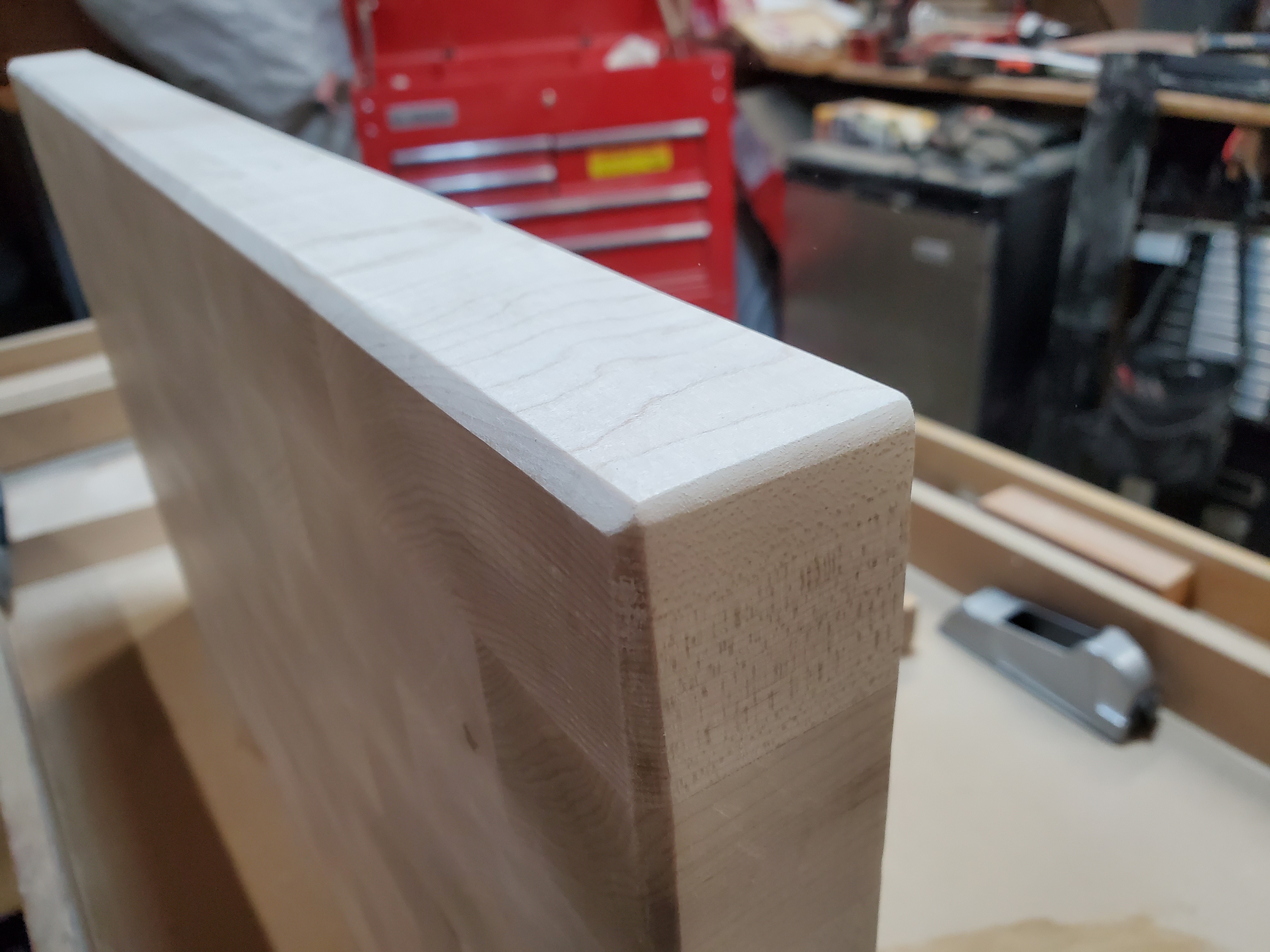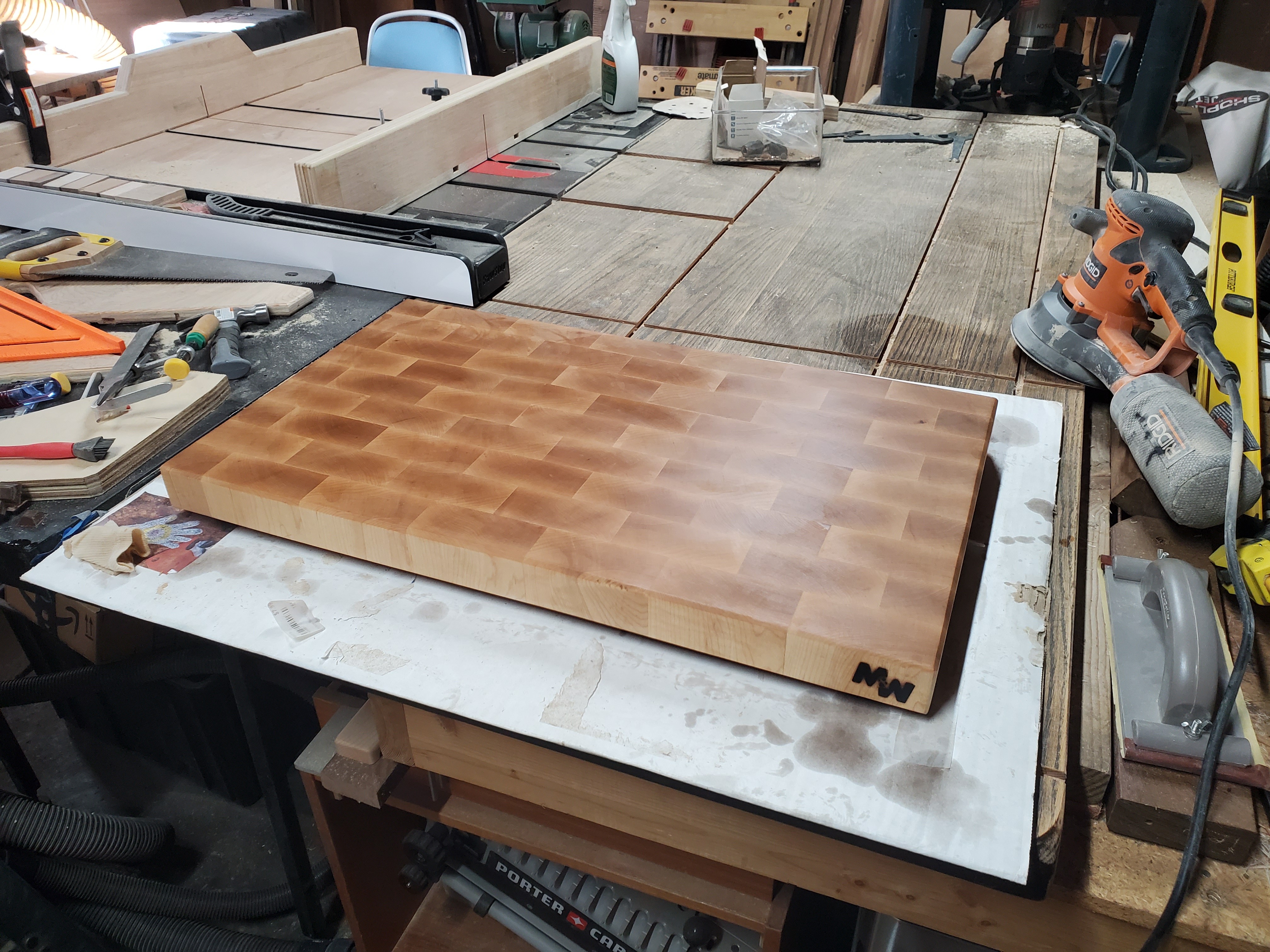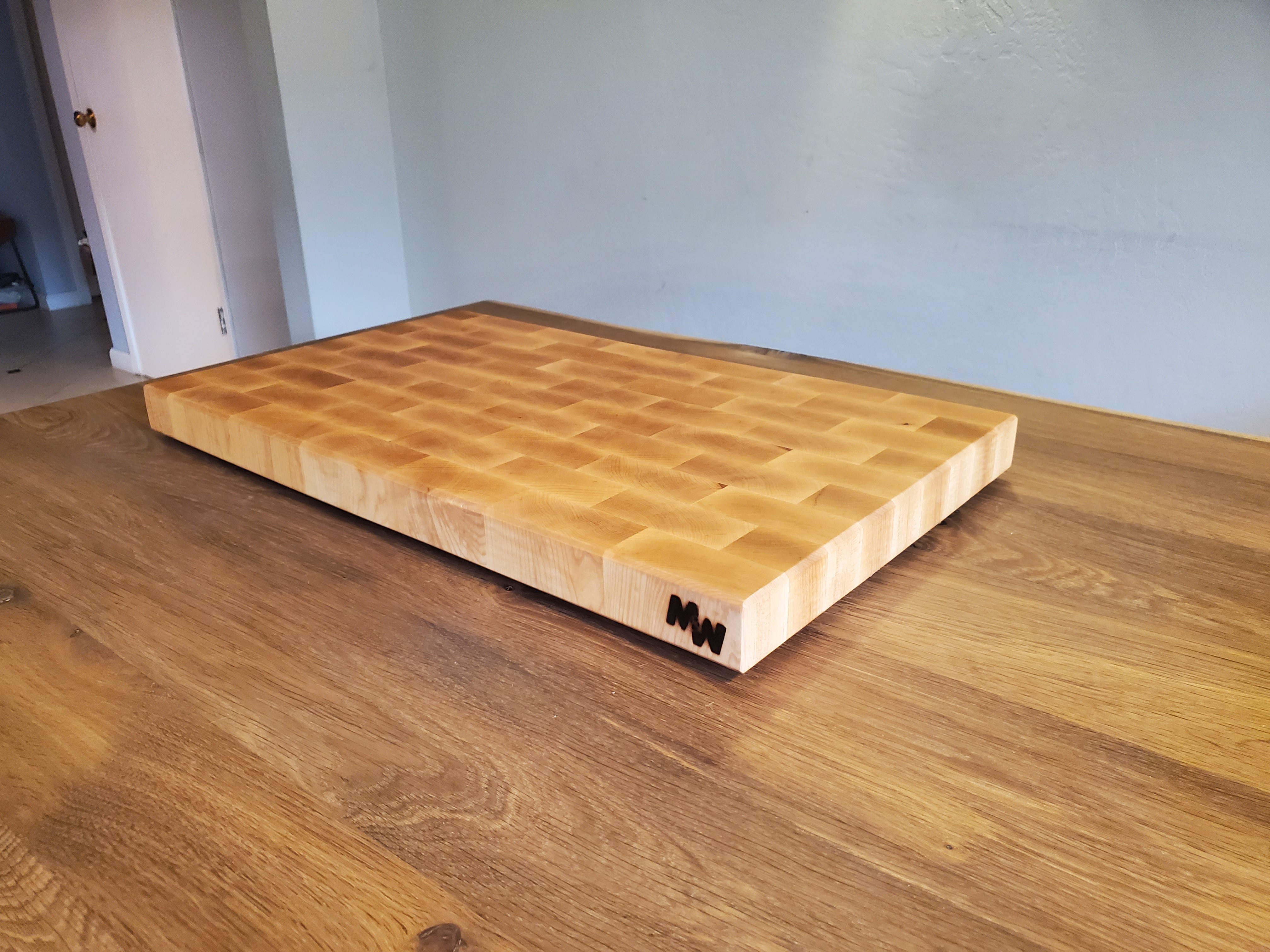
The top surface is pure end-grain maple — denser, more resilient, and fundamentally different from the face grain of the same tree. It resists dents where side grain would show them, and when it gets wet and dries again, it actually heals from cuts on its own. The layout of the staves creates a striking brick-like pattern across the surface, functional geometry that happens to be beautiful. This is a board built to be used hard and look better for it.
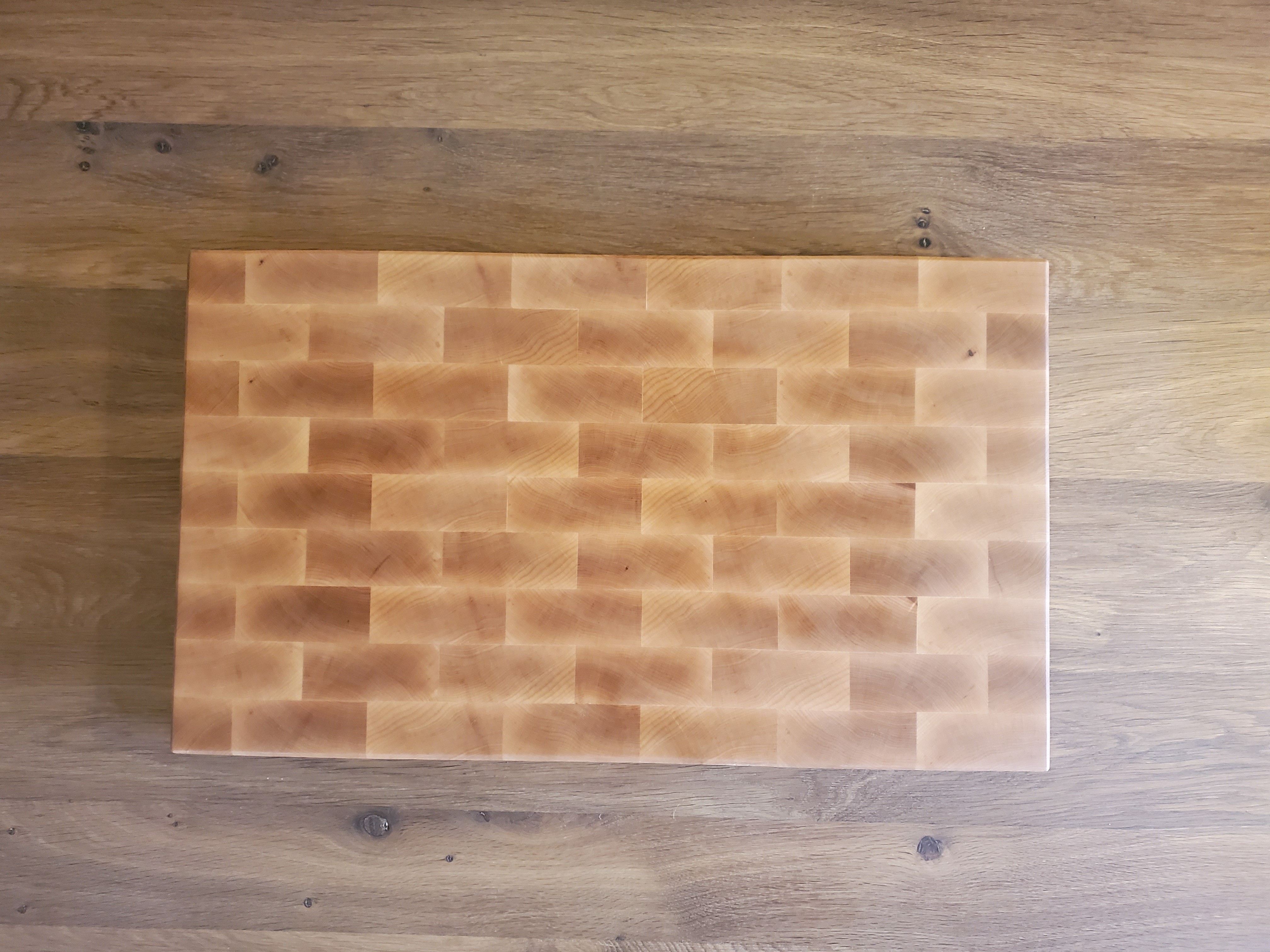
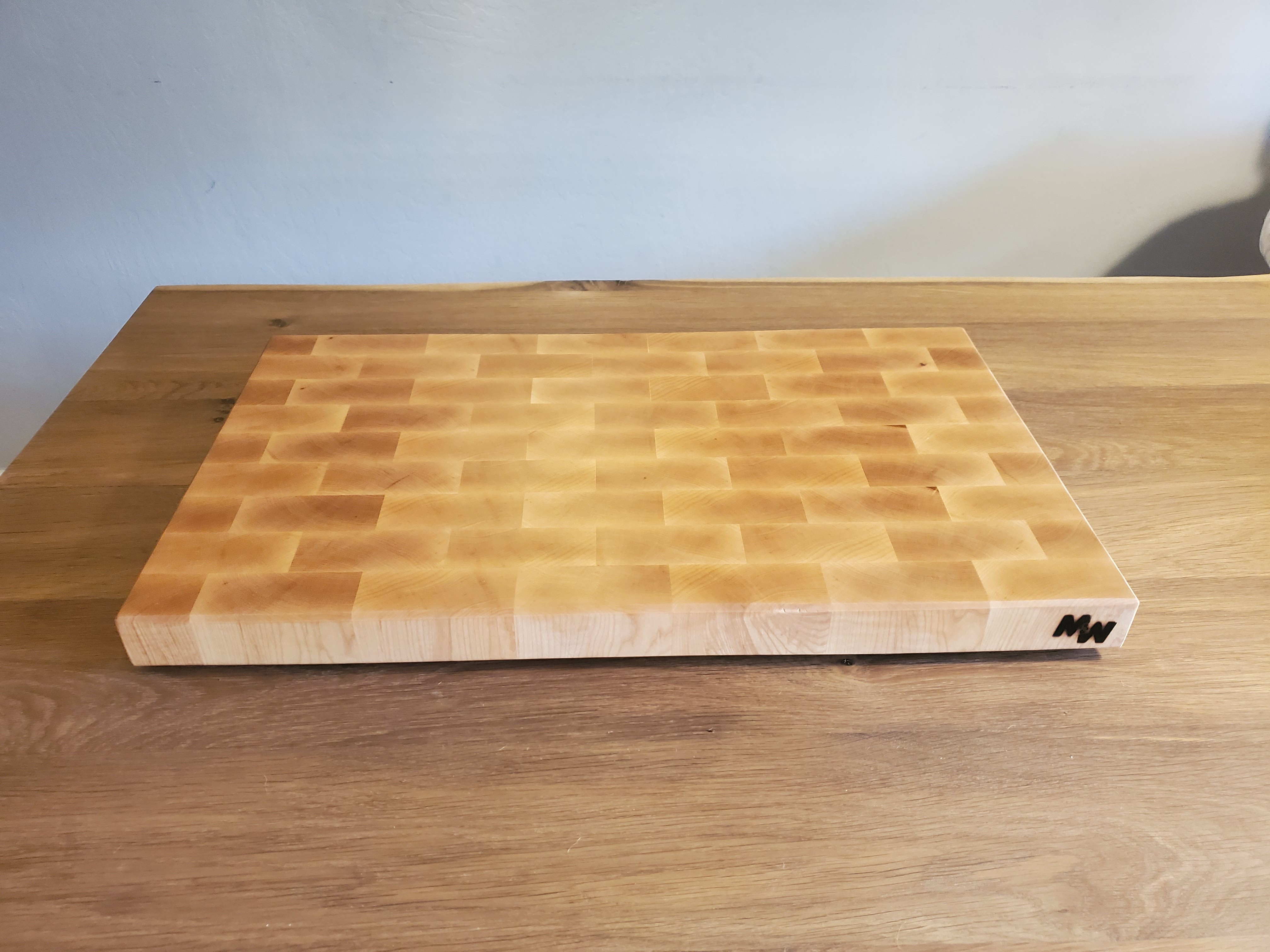
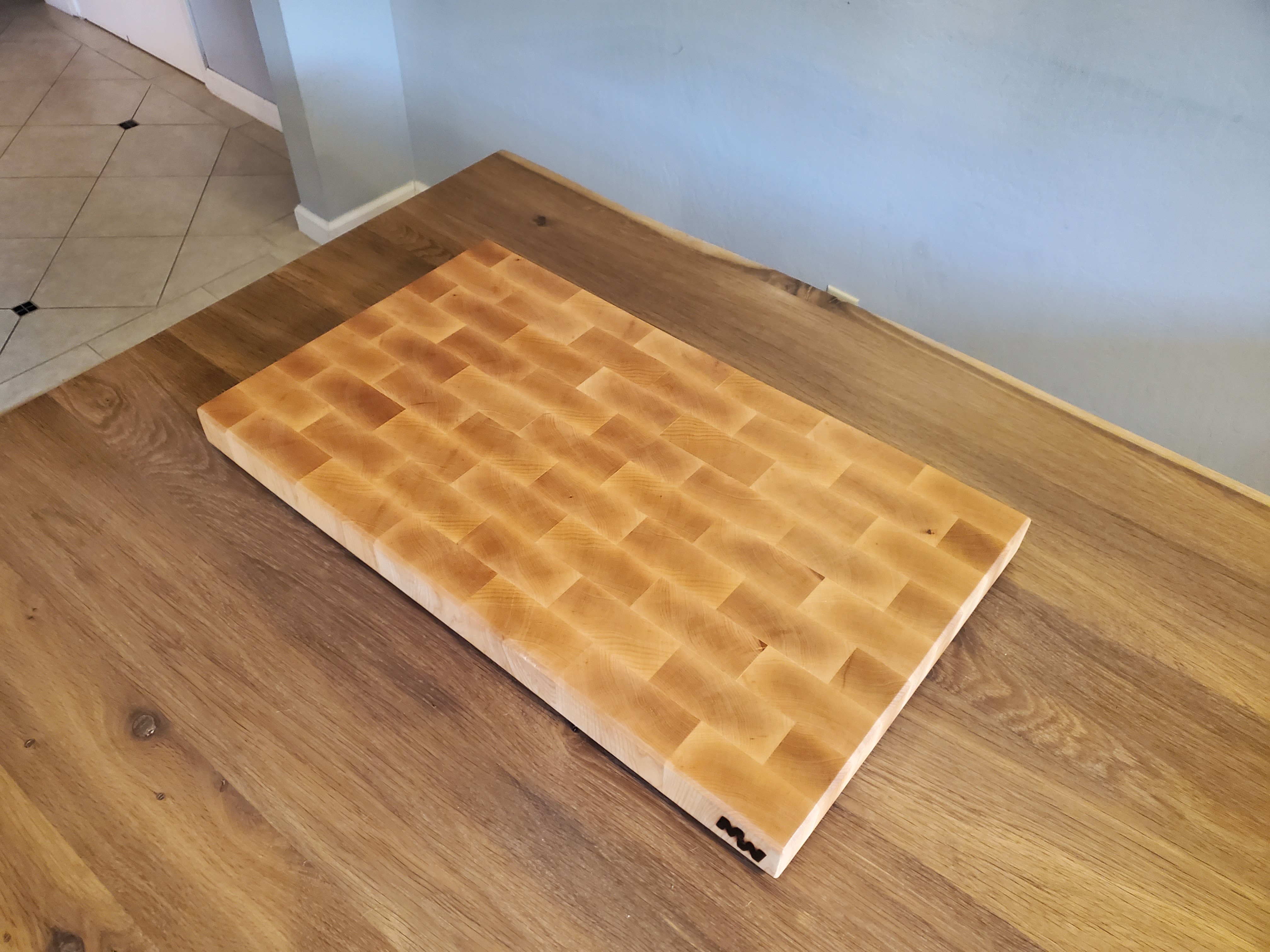
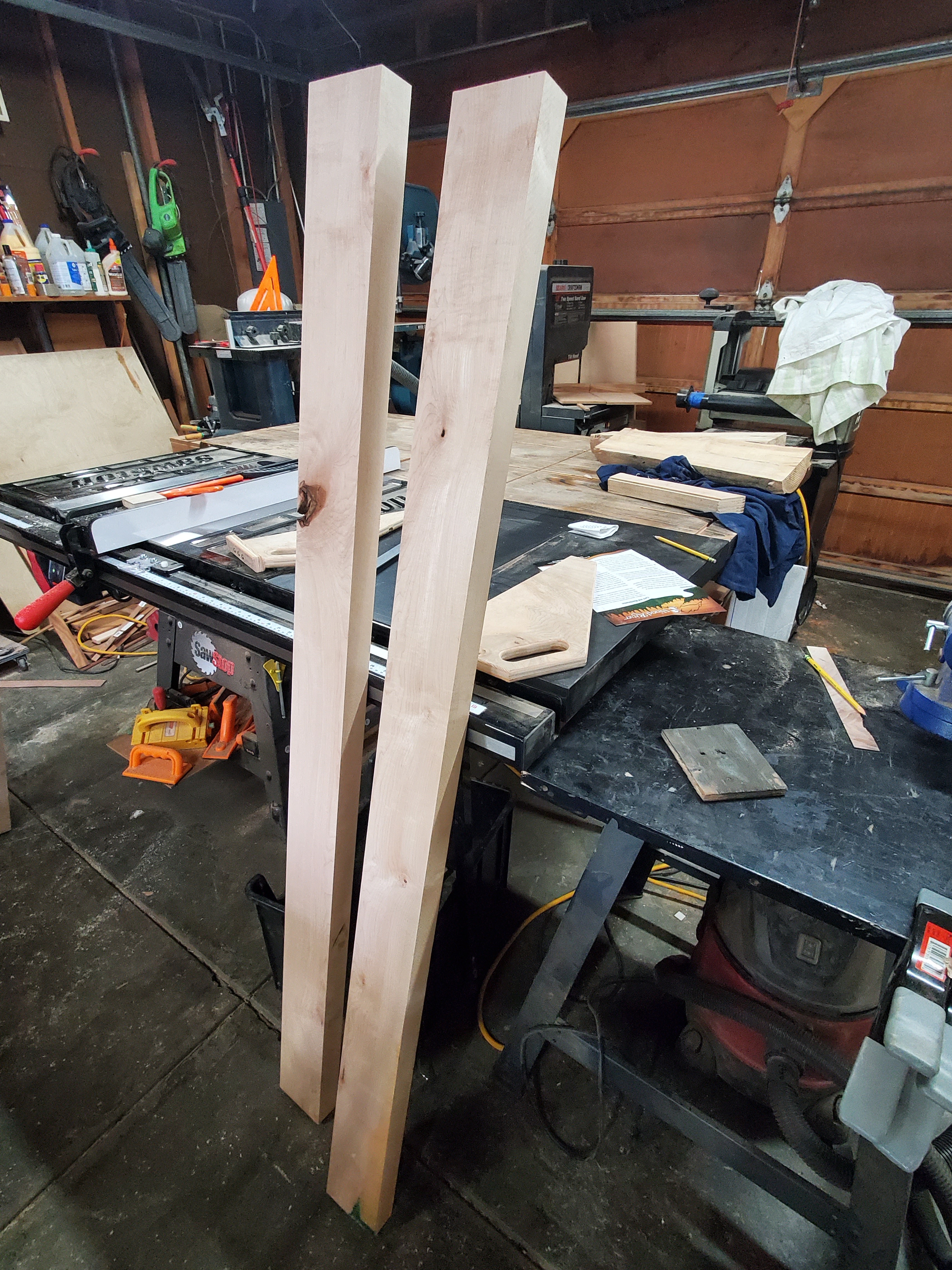
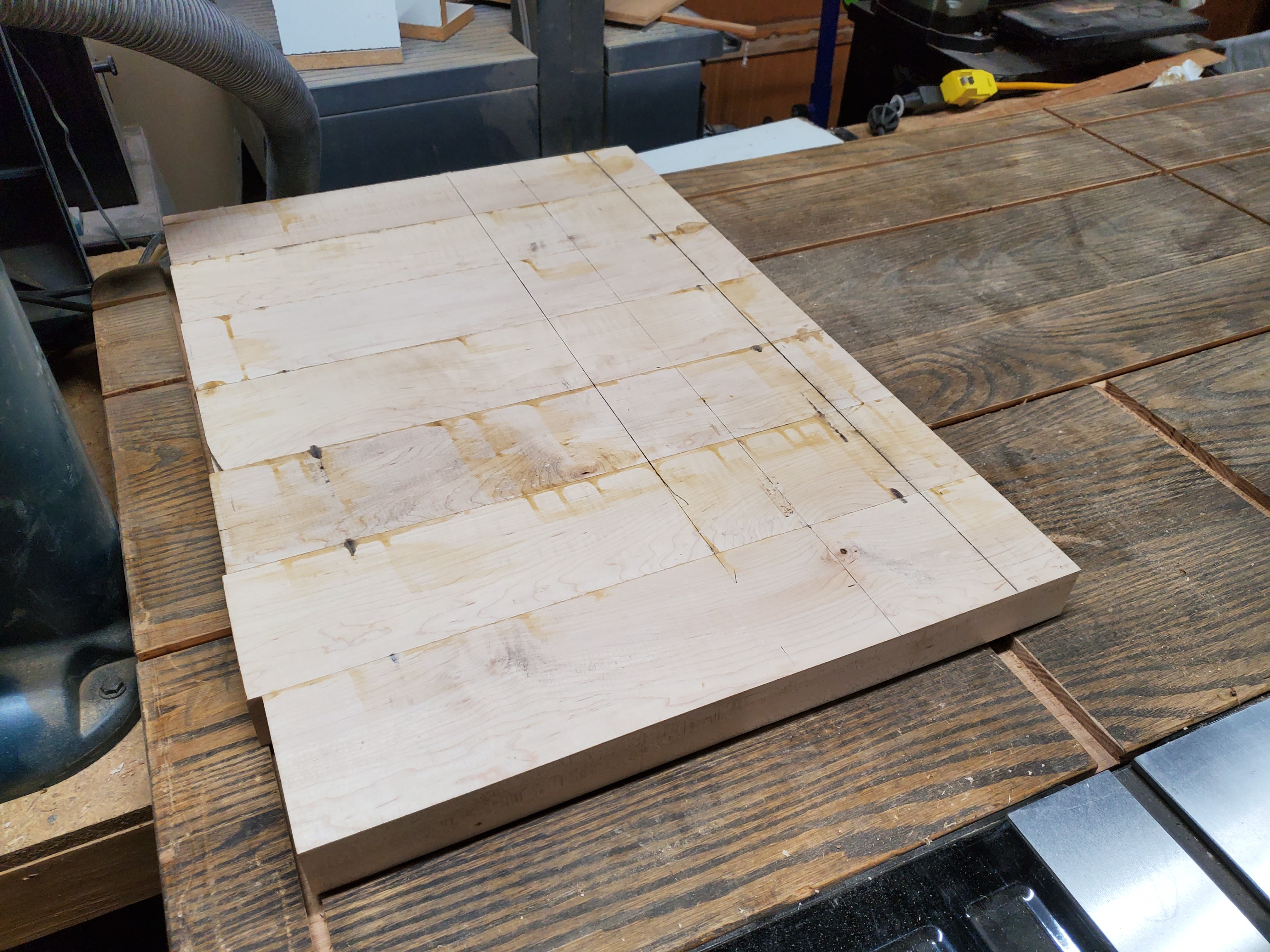
Building end-grain is a commitment — two to three times the effort of a standard board, and humbling at every step. First, a perfectly good cutting board gets chopped into staves, which never feels quite right until the result proves the point. Then the staves are rotated on their side and glued up, and the sanding begins — end grain doesn't give up its roughness easily, and patience is the only tool that works. The layout was kept to a clean brick pattern, letting the geometry speak for itself. It took longer than expected, cost more effort than seemed reasonable, and was worth every minute of it.